
Last updated October 31, 2026
 Smart locks
 House lockouts
 Re-keying
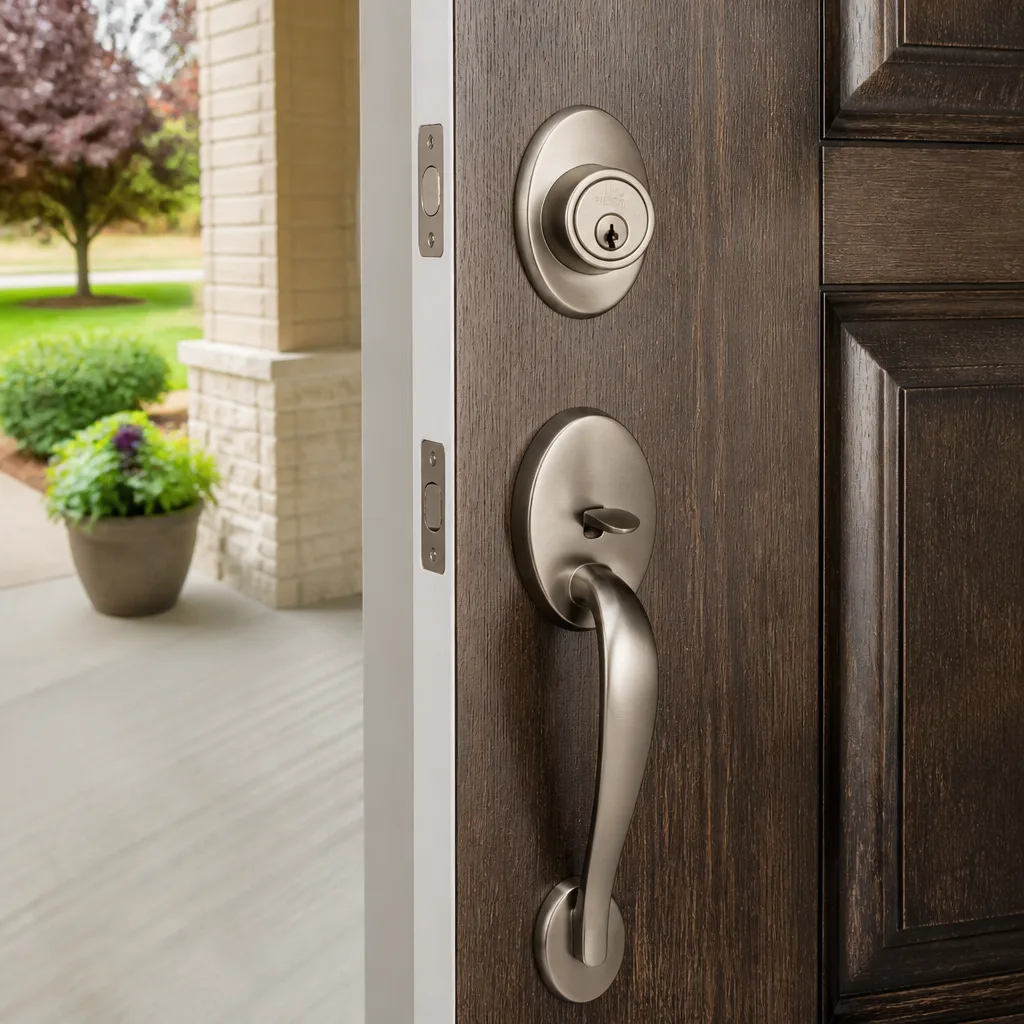 Deadbolt upgrades
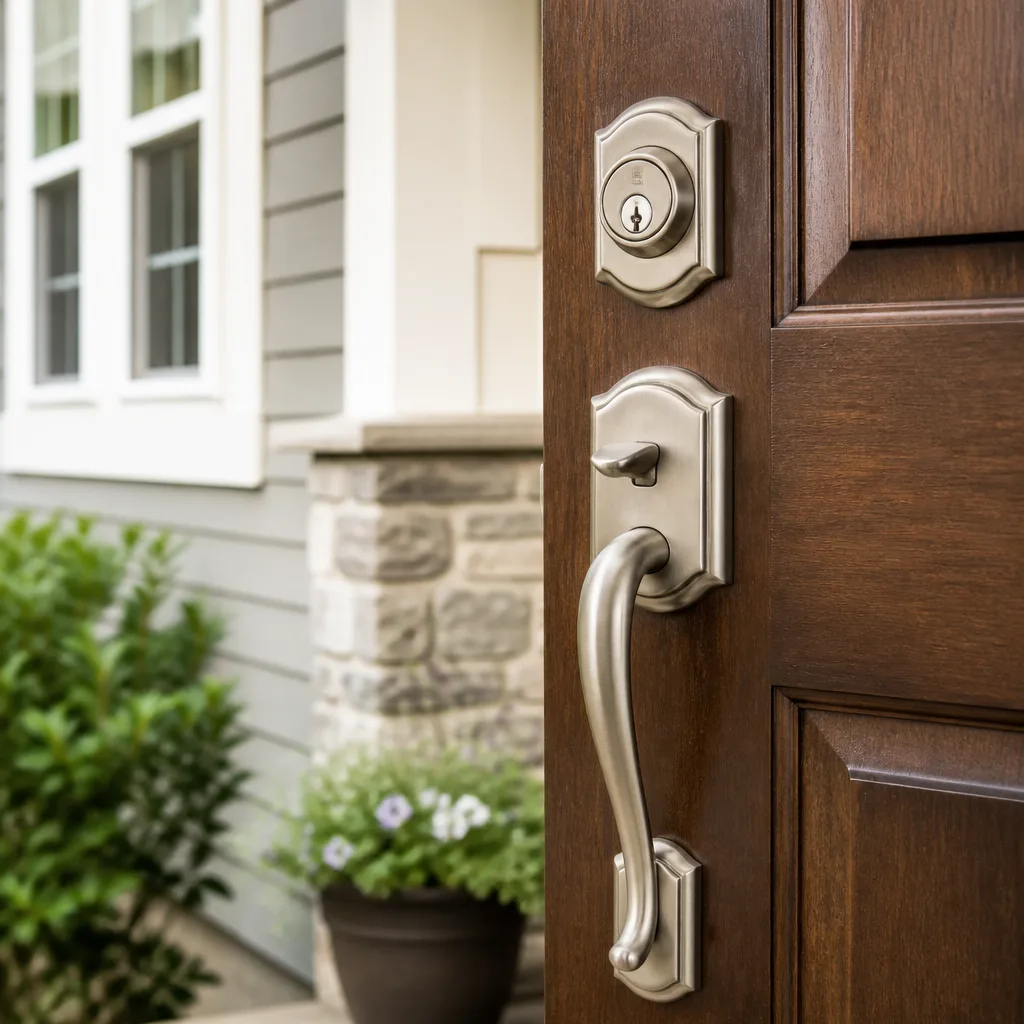 Schlage
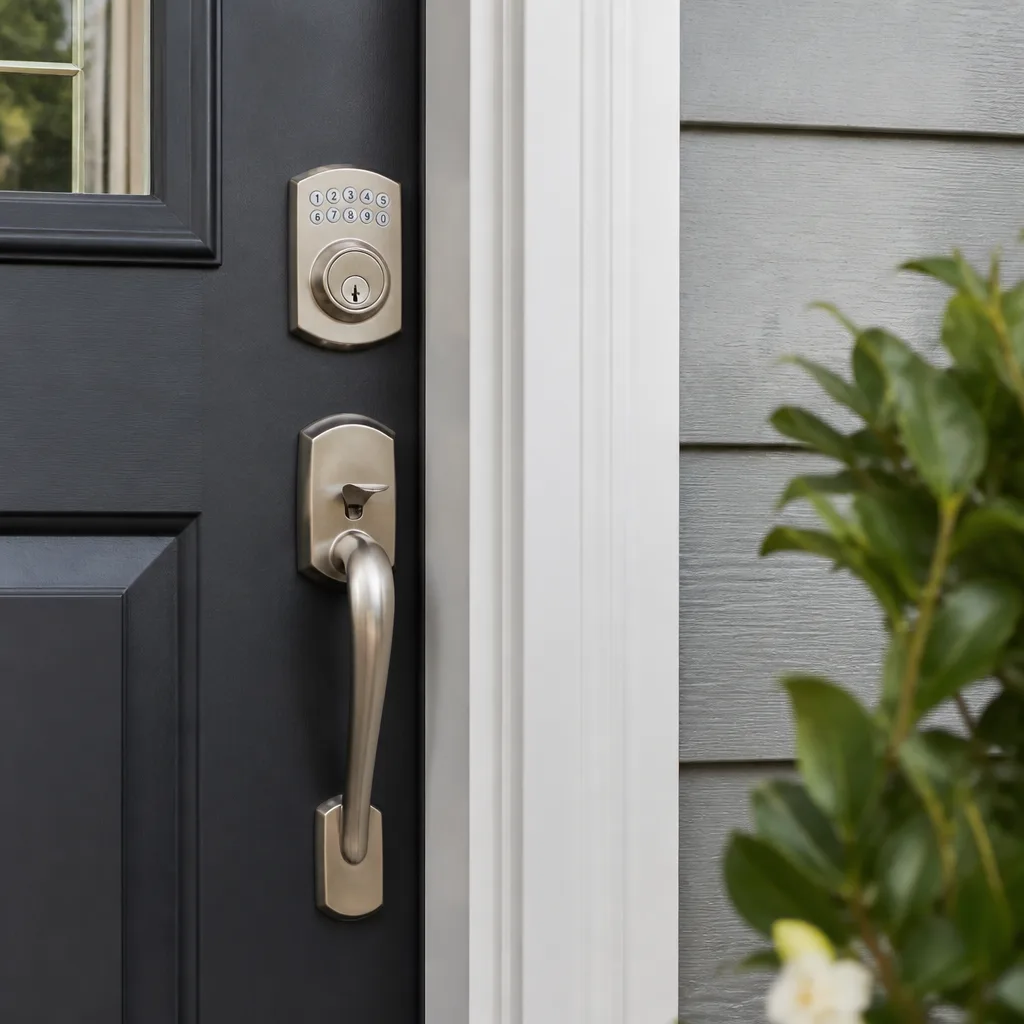 Kwikset
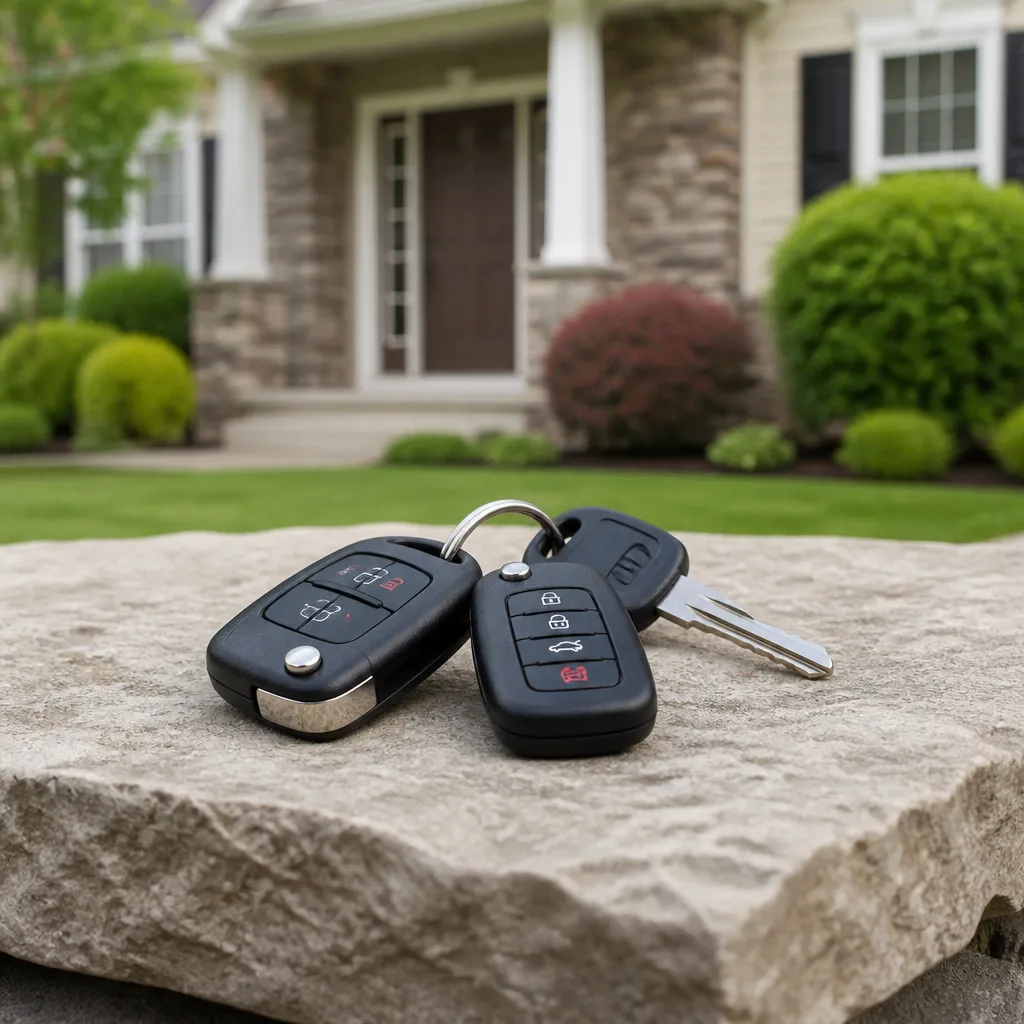 Car keys & fobs
Non-destructive entry first, always - and we re-key Schlage, Kwikset, and Baldwin locks on the spot while you watch
You get a price before we start. It does not change when we arrive. No surprises.
Get your free estimateSeasonal Locksmith Care for Tacoma: Year-Round Homeowner’s Guide
Here’s a counterintuitive fact about locks in Tacoma: most of them don’t fail from wear. They fail from weather. A deadbolt that “suddenly” stops latching in January almost always traces back to a door frame that absorbed moisture through November and December. The lock didn’t break. The geometry of the door changed around it. This guide walks through what to check each season, which lubricants actually work in our climate, and how to catch the small problems in Tacoma before they become 11 p.m. emergency calls. For more guides & resources, see our blog.
Styles & brands we work with
Quick Answer
Seasonal locksmith care in Tacoma means lubricating and inspecting your locks four times a year, with tasks timed to our wet winters and dry summers, as outlined in our Car Key Replacement Maintenance Checklist for Tacoma Homeowners. Fall lubrication before the rains, winter attention to freeze-prone exposed hardware, spring realignment after door swelling, and summer care for electronic keypads and fob seals will prevent the majority of lock failures that homeowners in Tacoma call us about every year.
Table of Contents
- Fall: Prep Before the Rain Returns
- Winter: Freeze Cycles, Padlocks, and Fob Batteries
- Spring: Post-Rain Door Swelling and Realignment
- Summer: UV Exposure, Electronic Keypads, and West-Facing Doors
- The Tacoma Lubricant Guide: Graphite vs. Teflon-Based
- The 12-Month Tacoma Lock Care Calendar
- Common Mistakes to Avoid
- When to Call a Professional
- Frequently Asked Questions
- The Bottom Line
Fall: Prep Before the Rain Returns
Tacoma’s rainy season runs from roughly mid-October through May. The time to prepare your locks is the six to eight weeks before it starts. Once the clouds settle in over Commencement Bay and the daily drizzle becomes constant, any lock that hasn’t been lubricated or inspected is already absorbing the moisture it will spend all winter fighting.
What actually happens when a lock gets wet repeatedly is a slow degradation of the internal pins and springs. Water carries microscopic debris into the keyway. The factory lubrication inside the cylinder breaks down. Over the course of a wet season, the key starts to feel slightly resistant, then noticeably sticky, then eventually the cylinder binds entirely just as you’re coming home from Sea-Tac on a dark, rainy night.
Here’s the fall checklist, in order:
- Test every exterior lock with its key. Insert the key slowly. Does it slide in cleanly or does it catch? Turn the key with the door open and closed. A lock that works smoothly with the door open but sticks when the door is shut is telling you the strike plate is already misaligned.
- Lubricate the keyway and the bolt. This is the single highest-impact maintenance task for Tacoma homeowners. More on lubricant selection below, but the short version: Teflon-based dry lubricant for most modern locks, graphite only for older brass cylinders without any existing residue.
- Check weatherstripping and door sweeps. Locks don’t exist in isolation. Worn weatherstripping lets moisture into the door frame, which leads directly to the swelling and warping that knocks locks out of alignment by January.
- Inspect the strike plate screws. The strike plate is the metal plate on the door frame where the deadbolt enters. If those screws are loose, even by a millimeter, the deadbolt grinds against the plate edge every time it extends. This wears both the bolt and the frame.
- Test any padlocks before you depend on them. Storage units, gates, sheds. If a padlock has been outside all summer catching dust and the occasional rain shower, it’s probably already got grit in the shackle mechanism. The fall test is simple: open it with the key, close the shackle, open it again. If it hesitates, flush it and lubricate it now.
One detail most guides get wrong: the lubricant you’d use on a Schlage deadbolt is not what we’d put in a Baldwin mortise lock or anything from Mul-T-Lock. High-security cylinders have tighter tolerances and different internal materials. A heavy oil that feels smooth in a loose Kwikset cylinder will gum up precision pins in a high-security cylinder within weeks. If you’ve invested in professional-grade hardware, use a Teflon-based dry lubricant with no oil carrier at all.
Winter: Freeze Cycles, Padlocks, and Fob Batteries
Tacoma doesn’t get the sustained deep freezes that Minneapolis or Chicago deal with, but we get something sneakier: freeze-thaw cycles. Temperatures hover in the 30s at night, rise into the 40s during the day, and the constant cycling is harder on locks than a flat 10 degrees would be. Every freeze traps moisture inside the lock. Every thaw releases it deeper into the mechanism.
Exposed padlocks are the most vulnerable. A padlock hanging on a gate latch in Tacoma will collect rainwater inside the shackle holes and the keyway. When the temperature drops below freezing, that water turns to ice and expands. The common result is a padlock that won’t accept its key because the keyway itself is frozen shut. People in Tacoma discover this most often on storage unit locks, boat trailer locks, and fence gates.
What to do during winter months:
- Never force a frozen key. If the key doesn’t slide into the keyway smoothly, don’t push harder. A snapped key inside a frozen lock is a worse problem than the frozen lock.
- Position padlocks with the keyway facing downward. Gravity is a simple, free lock preservation tool. A padlock with its keyway pointing down sheds water instead of collecting it.
- Check fob batteries in cold weather. Car key fob batteries are chemical systems, and chemical reactions slow down in the cold. A fob that works fine in August can fail in February, especially if the battery has been in the fob for two or three years already. If your fob works sometimes and not other times, and it’s cold out, it’s almost certainly a battery at the end of its life, not a fob programming problem.
- Lubricate locks after freeze events, not just before winter. The freeze-thaw cycle forces moisture through the lock mechanism. A light re-application of dry lubricant after a hard freeze keeps the internals protected for the next one.
In our experience serving Tacoma homeowners, the most common winter lock call is a deadbolt that works with the key but won’t fully extend or retract the bolt. The diagnosis is almost always the same: the strike plate moved slightly as the frame absorbed months of moisture, and now the bolt is catching on the plate edge. It’s a ten-minute fix with the right tools. Ignored, it becomes a broken bolt, a bent spindle, or a lock that doesn’t lock at all.
Spring: Post-Rain Door Swelling and Realignment
By the time April arrives in Tacoma, your wood door frames have been absorbing rainfall for six months. Wood swells when it takes on water. The result is predictable: the gap between the door edge and the frame narrows, the strike plate shifts, and locks that worked perfectly in October start to hang up or fail to latch.
Spring is the inspection season. Here’s what to check in order:
- Look at the gap between the door and the frame. If the gap is noticeably wider at the top or bottom than it is elsewhere, the frame has moved or the door has warped. That uneven gap is the root cause of most seasonal latch problems.
- Test the deadbolt throw with the door open and closed. Open door: the bolt extends and retracts freely with no resistance. Closed door: the bolt catches or drags. That difference tells you the door and frame are no longer aligned, and the lock itself is fine.
- Inspect the strike plate for scratches or wear marks. A polished line on the edge of the strike plate shows exactly where the bolt is making contact. If the bolt has been grinding against the plate all winter, you’ll see the evidence.
- Check the hinges. A sagging door is usually a hinge problem, not a lock problem. Tighten hinge screws first. If the top hinge screws spin without tightening, the screw holes are stripped, and the door will continue to sag no matter what you do to the lock. This is a common condition in older Tacoma homes, especially in neighborhoods with lots of pre-1960 construction where door frames have seen decades of seasonal movement.
- Flush exterior lock cylinders. After a wet winter, exterior cylinders collect debris that the lubricant held in suspension. A compressed-air flush or a structured solvent flush followed by fresh dry lubricant restores smooth operation. This is the spring-cleaning equivalent for your door hardware.
Spring is also the right time to think about rekeying. If a roommate moved out, a contractor finished a renovation, or you’ve simply lost track of how many keys are floating around, spring rekeying resets the deck. It’s new security without new hardware, and at our rekey service area we do this work across every brand we service, from the residential standards to high-security options like Medeco and Abloy.
Summer: UV Exposure, Electronic Keypads, and West-Facing Doors
Tacoma’s summers are mild compared to the rest of the country, but two factors make summer lock care relevant here. First, our dry summers are when dust accumulates, and dust is abrasive to internal lock parts. Second, the long July days mean west-facing entries get hours of direct afternoon sun, and that UV exposure has a measurable effect on electronic lock components.
Electronic keypads and smart locks share a common vulnerability: the rubber or silicone seals around the buttons and the battery compartment degrade under UV light. Over time, those seals harden, crack, and eventually let moisture and dust into places it shouldn’t be. A keypad lock on a west-facing Tacoma front door that bakes in afternoon sun every summer will have a shorter seal life than an identical lock on a north-facing door. It’s simple physics.
Summer checklist:
- Inspect the keypad face and battery cover seal for cracks or hardening. If you can see light through the seal or if it feels stiff and brittle, it’s time to replace the seal or the unit. The seal is the only thing standing between your door lock’s circuit board and the next rainy season.
- Clean the keypad surface with a dry cloth. Dirt and oil from fingers build up on keypad surfaces through the summer. If a lock uses a touchscreen, a clean surface means more reliable number detection.
- Change the batteries in August or September. Most electronic locks use AA or 9V batteries that last six to twelve months. Replacing them in late summer means the fresh batteries will carry through the cold season, when a dead battery on a keypad lock means either total lockout or dependence on a physical key you may not carry.
- Test car fob seals. Key fobs have internal seals around the buttons too. A fob that’s been on a keyring for years, exposed to heat and skin oils and occasional rain, will eventually let moisture into the circuit board. It’s a gradual process, and a fob that’s chancy in fall usually had its seals compromised during summer months. If your fob is working intermittently, testing and potential replacement now is cheaper than a full car key replacement when the fob finally quits.
- Lubricate less often than in winter, but still do it. Summer dust in Tacoma is fine, silty particulate that settles into everything. A lock that sits all summer without lubrication will have grit in its keyway by late August. Maintain the schedule.
The Tacoma Lubricant Guide: Graphite vs. Teflon-Based
Here’s the answer to the question every homeowner asks once they start doing seasonal maintenance: what should I actually put in my lock? The answer depends on the lock, not on the season.
Teflon-based dry lubricant is the correct choice for the overwhelming majority of locks in Tacoma homes. It goes on wet with a solvent carrier that evaporates in seconds, leaving a thin Teflon film on the internal parts. It doesn’t attract or hold dust, it doesn’t gum up in cold weather, and it doesn’t degrade in the presence of moisture. It’s also compatible with electronic locks because it’s non-conductive once the carrier evaporates.
Graphite powder is the traditional lock lubricant, and it still works in the right context. Graphite is a fine dry powder that coats the pins and springs inside the cylinder. The right context for graphite is an older, all-brass cylinder with no existing oil or grease residue inside. The wrong context is a lock that has been previously lubricated with any kind of oil, because graphite mixed with oil forms a paste that eventually hardens and seizes the lock. Graphite is also problematic in high-humidity environments because it clumps in the presence of moisture.
Given Tacoma’s climate, here’s the simple rule: use Teflon-based dry lubricant for everything. It works in Schlage, Kwikset, Yale, Baldwin, and the high-security cylinders from Medeco, Mul-T-Lock, Sargent, and Abloy. It doesn’t interact badly with previous lubricants, it doesn’t clump in our humidity, and it performs consistently across our temperature range.
What not to use: WD-40, household oil, motor oil, silicone spray from the garage cabinet. WD-40 is a water displacer and solvent, not a lubricant. It briefly makes a sticky lock feel better and then leaves behind a residue that attracts every particle of dust and turns into a grinding paste. If a lock has been WD-40’d, the fix is to flush the cylinder thoroughly and relubricate with the proper dry product.
Application process:
- Insert the straw nozzle into the keyway as far as it will go.
- Spray for one second, no longer.
- Insert and remove the key several times to distribute the lubricant across the pins.
- Turn the key through a full lock and unlock cycle several times.
- Wipe any excess from the face of the lock and the key with a dry cloth.
- Spray a small amount into the deadbolt throw mechanism and operate it several times.
For padlocks, focus the spray into the shackle holes and the keyway. Operate the shackle repeatedly. Wipe down the exterior. A padlock that has been flushed and lubricated in fall will survive a Tacoma winter without seizing.
The 12-Month Tacoma Lock Care Calendar
Here’s a month-by-month schedule keyed to Tacoma’s actual weather patterns. This is the printable version: take a screenshot or write it down and stick it in the garage.
- January: Monitor locks during freeze-thaw cycles. If a key sticks, don’t force it. Check fob batteries in cold weather and replace if response is sluggish.
- February: Test every exterior deadbolt for smooth operation with the door closed. Reapply dry lubricant after any hard freezes. This is peak strike-plate drift season.
- March: Inspect padlocks on gates, sheds, and storage units. Flush and lubricate any that are sticky. Most padlock failures surface in March as accumulated winter water cycles through freeze-thaw.
- April: Spring inspection month. Check door gaps, strike plate alignment, and hinge screw tightness on every exterior door. Flush exterior cylinders with compressed air before fresh lubricant.
- May: Rekey season. After May move-outs and before summer travel, take inventory of who holds keys to your house. Rekeying resets access if there’s any doubt.
- June: Test all electronic locks and keypads. Check keypad seal integrity. Clean touchscreen keypads with a dry cloth. This is the start of UV season for west-facing doors.
- July: Inspect west-facing electronic lock enclosures for seal hardening. Direct sun exposure is at its peak. Consider adding a protective awning or shield if degradation is visible.
- August: Replace batteries in all electronic locks and key fobs before the cold season. A $5 battery now prevents a $150 service call in December.
- September: Fall prep part one: lubricate every exterior lock with Teflon-based dry lubricant. Test every key on every lock. Check weatherstripping and door sweeps and replace if worn.
- October: Fall prep part two: test padlocks before you depend on them for winter. Torque-check strike plate screws. Position padlocks keyway-down. Verify all keys are cut cleanly and aren’t showing excessive wear.
- November: First month of consistent rain. Monitor door frames for early swelling. Note any locks that are beginning to feel resistant and address them now, not in January.
- December: Cold and wet overlap. Test everything one more time. Carry a physical key for any electronic lock. Know who you’ll call for emergency locksmith help if a lock fails during the holidays.
This calendar assumes the average Tacoma weather pattern. Adjust by a week or two in either direction if a given year runs unusually dry or wet.
Common Mistakes to Avoid
- Lubricating only when a lock is already sticky. By the time a lock feels resistant, internal wear has already started. Seasonal lubrication is preventive maintenance, not a repair. The schedule matters more than the product.
- Using WD-40 or household oil. These products make a lock feel better temporarily and then cause accelerated wear and eventual seizure. The proper products are Teflon-based dry lubricants or, in limited cases, graphite.
- Forcing a key that doesn’t turn smoothly. A key that resists turning is telling you something. Forcing it risks breaking the key inside the cylinder or stripping internal pins, which turns a ten-minute fix into a full cylinder replacement.
- Ignoring the door frame. In Tacoma specifically, most “broken locks” are actually door alignment problems. The lock is a mechanical device and the frame is an organic one. When the frame moves, it doesn’t matter how well-built the lock is.
- Waiting until the electronic lock is completely dead to think about batteries. Electronic locks give signs: slower motor response, dimmer indicator lights, a keypad that occasionally doesn’t register the first press. Replacing batteries on the summer schedule prevents the winter lockout scenario.
- Keeping the same keys after a life change. Roommate moves, contractor projects, divorce, an ex-partner. Any situation where someone else had a copy of your keys is a reason to rekey. The cost is a fraction of what new hardware runs, which makes it the cheapest real security upgrade available at Lodestar Locksmith home.
When to Call a Professional
Some situations warrant a professional rather than a DIY attempt. If a key has snapped inside a cylinder, if a lock is fully seized and no amount of flushing restores it, if a door frame is so badly shifted that the deadbolt won’t engage at all, or if you’re dealing with a high-security lock from Medeco, Mul-T-Lock, or Abloy that requires specialized servicing, those are professional calls. High-security cylinders have tighter tolerances and brand-specific internals that make amateur repairs more likely to cause damage than to fix the problem. The same applies to vehicle lockouts and lost car keys: the equipment and software needed to program modern transponder keys is specialized, and the DIY options often make the problem worse. See our Car Key Replacement Troubleshooting: Common Problems and How to Fix Them for more details. Lodestar Locksmith offers free estimates in Tacoma, call (855) 382-0943 and we’ll tell you the cost before we dispatch anyone.
Frequently Asked Questions
Lubricate your exterior door locks four times a year in Tacoma, once per season. The fall lubrication in September is the most important one because it protects the lock before the six-month rainy season begins. Spring lubrication after the winter moisture cycle is the second most important. Summer and winter applications maintain the protective film through dry dust season and freeze-thaw cycles.
The best lubricant for door locks in Tacoma’s wet climate is a Teflon-based dry lubricant with a solvent carrier. It resists moisture, doesn’t attract dust, and doesn’t gum up in cold weather the way oils and greases do. Graphite is a second option for older all-brass cylinders, but it clumps in high humidity and reacts badly with any existing oil residue. Call (855) 382-0943 if you want a specific product recommendation for your hardware.
A deadbolt that sticks only when the door is closed is a door alignment problem, not a lock problem. The gap between the door and the frame has changed, usually because the wood door frame absorbed moisture from Tacoma’s winter rains, and the strike plate no longer lines up with the deadbolt throw. The fix involves realigning the strike plate or tightening the hinges, not replacing the lock.
Cold weather alone rarely breaks a lock, but freeze-thaw cycles can. When water inside a lock freezes, it expands and can crack internal components or bind the pins. Tacoma’s pattern of near-freezing nights and thawing days is particularly effective at working moisture deeper into locks. Exposed padlocks are the most vulnerable, which is why they should be positioned keyway-down and lubricated before winter.
Rekey when the locks are in good working condition but you’re uncertain who has keys. Rekeying changes the internal pins so old keys no longer work, which costs less than new hardware. Replace when the lock itself is worn out, seized, corroded, or you want to upgrade to a higher-security brand. Our guide on Choosing the Right Locksmith Brand: A Buyer’s Guide for Tacoma can help with that decision. A locksmith can assess which situation applies to your specific hardware.
Yes, more than most Tacoma residents realize. Salt air reaches further inland from Commencement Bay than people account for, and it accelerates corrosion on exposed metal lock components. Homes in the Stadium District, the North End, and neighborhoods near the water see faster rust on padlocks, gate hardware, and even exterior door locks than homes further inland. Extra lubrication frequency and choosing corrosion-resistant hardware for waterfront-adjacent properties are both worth considering.
The Bottom Line
Seasonal lock care in Tacoma is not a nice-to-have. The climate here is hard on door hardware in ways that show up as emergency calls. Wet winters swell door frames. Freeze-thaw cycles work moisture into padlocks and keyways. Dry summers kill keypad seals and fob batteries on schedule. The fix is simple: lubricate with the right product four times a year, inspect door alignment every spring, replace electronic batteries every August, and address small problems before they become lockouts. When you do need a professional for rekeying, automotive key work, or emergency access, we work in the brands you’ve read about. Call (855) 382-0943 for a free estimate.
Written by the team at Lodestar Locksmith, serving Tacoma since 2012.