
Last updated October 31, 2026
 Smart locks
 House lockouts
 Re-keying
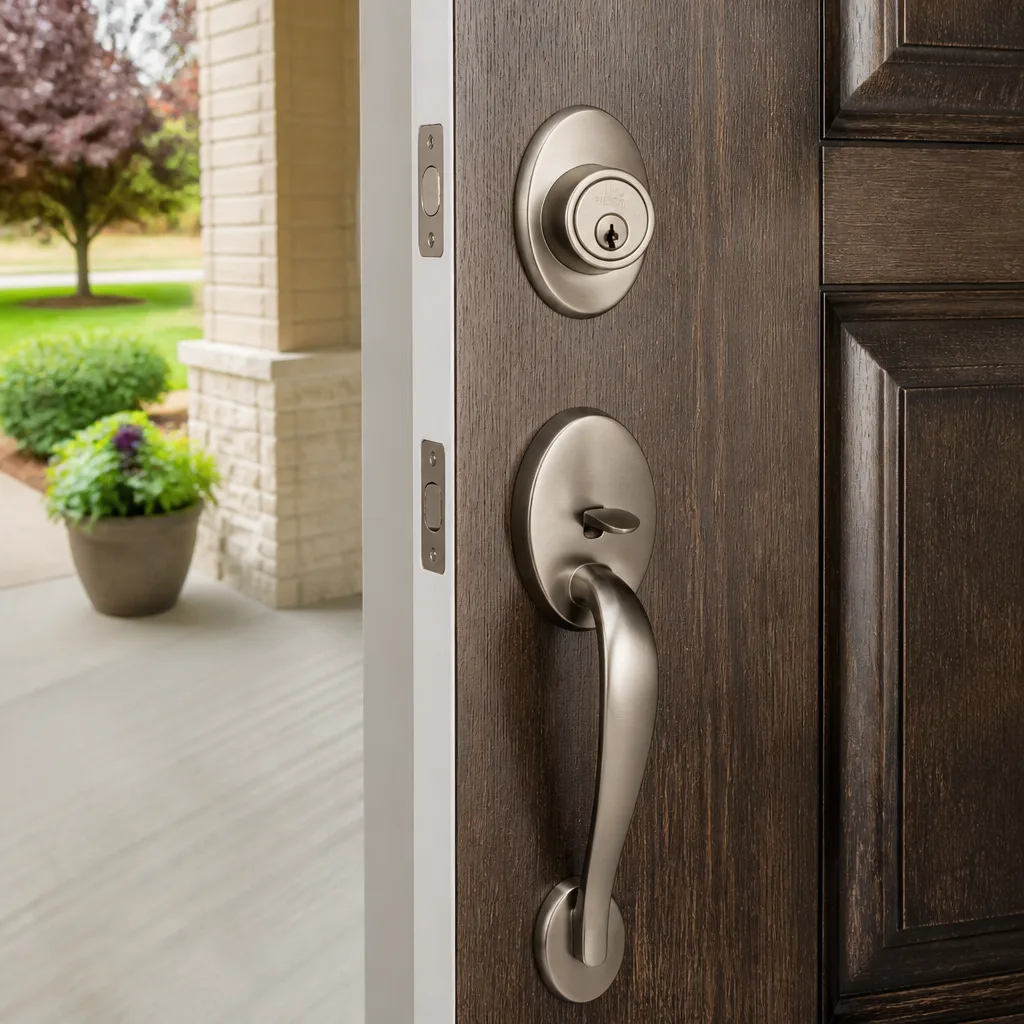 Deadbolt upgrades
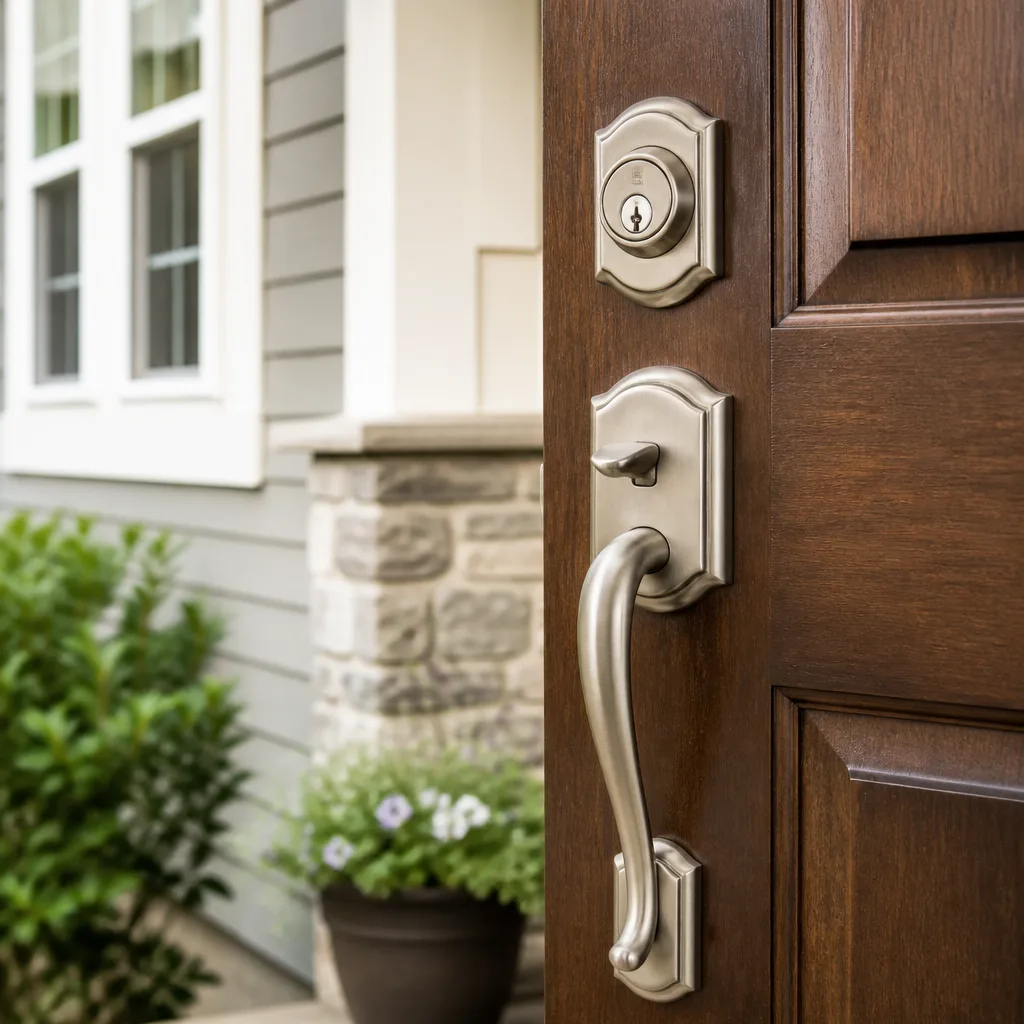 Schlage
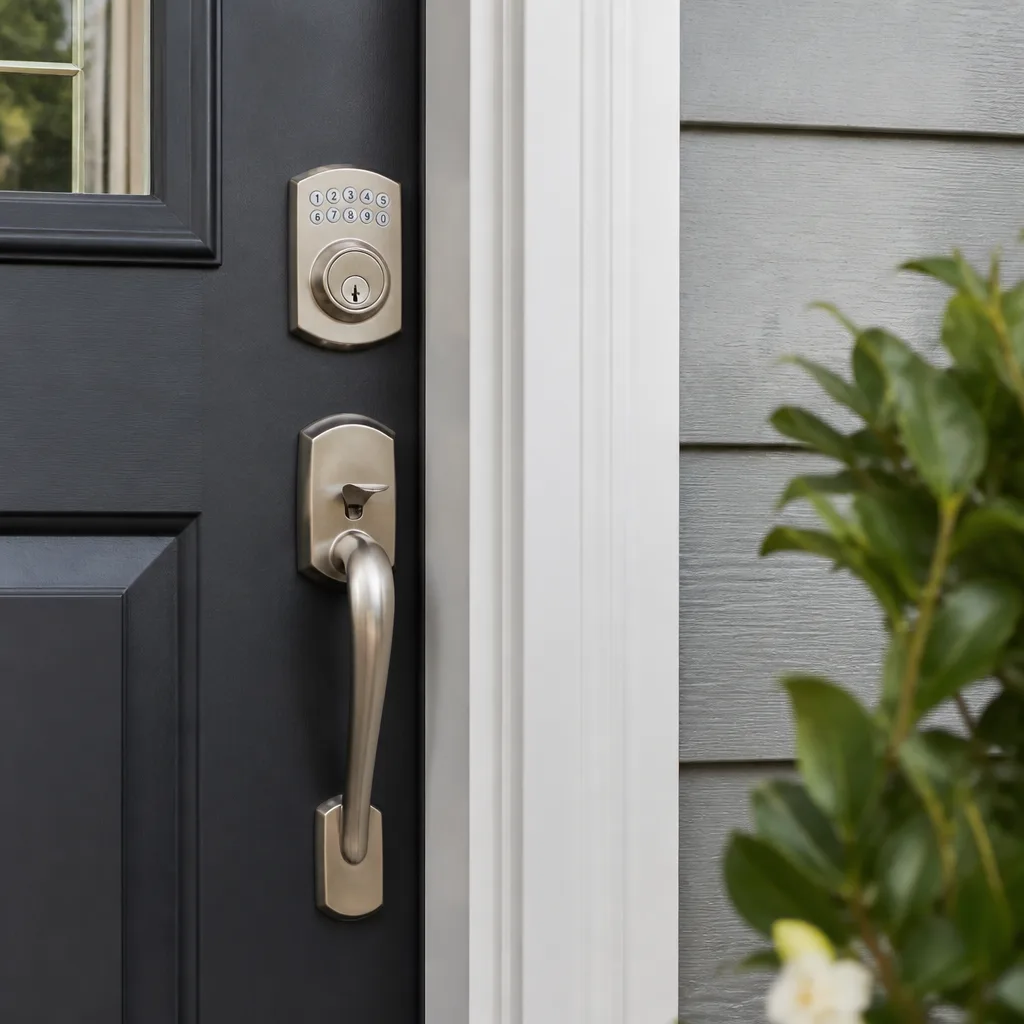 Kwikset
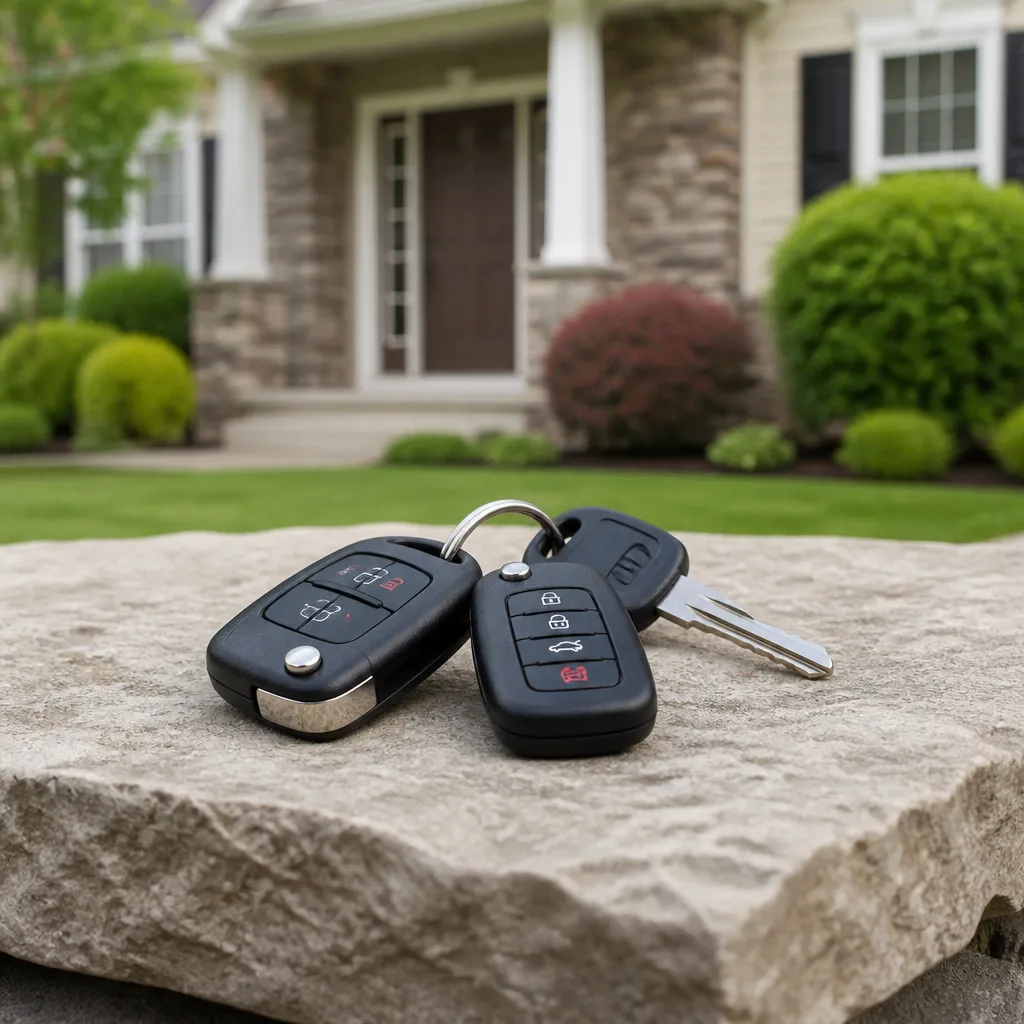 Car keys & fobs
Non-destructive entry first, always - and we re-key Schlage, Kwikset, and Baldwin locks on the spot while you watch
You get a price before we start. It does not change when we arrive. No surprises.
Get your free estimateHow to Hire a Locksmith Contractor in Tacoma: A Step-by-Step Guide
Washington State is one of roughly a dozen states that does not license locksmiths. That single fact changes how you should hire one in Tacoma. A Google Business Profile takes ten minutes to create, requires no proof of training, and disappears just as fast when complaints pile up. Pierce County consumer protection records show bait-and-switch locksmith listings continuing to surface even in the past five years, often tied to out-of-state dispatch networks. This guide gives you a repeatable vetting process for Tacoma, one that works whether you’re locked out at 11 p.m. or planning a full rekey after closing on a house in North End. For emergency preparedness tips specific to Tacoma homes, see our dedicated guide.
Styles & brands we work with
Quick Answer
To hire a trustworthy locksmith contractor in Tacoma, verify the business has a physical presence in Pierce County, ask which lock brands they’re trained and authorized to service (not just “how many years” they’ve been doing it), require a written estimate before any work starts, and confirm the price on that estimate is the price you’ll pay. In a state with no licensing requirement, your screening process is the only protection you have. A legitimate Tacoma locksmith will answer brand-specific questions without hesitation and hand you a line-item quote without being asked.
Table of Contents
- Why Washington’s Lack of Licensing Should Shape Your Search
- Step 1: What to Verify Before You Even Pick Up the Phone (5-Minute Check)
- Step 2: The Phone Call – 7 Questions That Separate a Real Locksmith from a Dispatch Broker
- Step 3: The Written Estimate – What It Must Include and What Inflates It
- Step 4: When the Locksmith Arrives – Verification in Under Five Minutes
- Step 5: Brand Knowledge Matters More Than Years of Experience
- Step 6: Hiring for High-Security Work – A Different Standard
- The Due-Diligence Checklist: Phone, Arrival, and Post-Job
- Common Mistakes to Avoid
- When to Call a Professional
- Frequently Asked Questions
- The Bottom Line
Why Washington’s Lack of Licensing Should Shape Your Search
Washington does not issue a state locksmith license. That means anyone with a drill and a set of picks can legally call themselves a locksmith in Tacoma tomorrow. There’s no testing, no background check, no continuing education requirement, and no locksmith permits or inspections required by Washington State. The burden of verifying competence falls entirely on the person hiring.
This matters differently depending on the job. An emergency lockout on a Kwikset deadbolt is a low-risk hire; even an underqualified worker can usually open it, though they may also damage the cylinder and charge you for a replacement. A rekey of an entire six-bedroom house in Proctor District or installing a Medeco high-security system on a commercial property is a different calculation. That’s where an untrained operator can do real damage: mis-keyed cylinders, voided manufacturer warranties, or a lock that works today and fails next month when the coast’s wet winter air hits cheap replacement parts.
Tacoma’s maritime climate also plays a role. Locks installed near the water, in neighborhoods like Ruston or along Commencement Bay, face salt air and persistent moisture. A competent local locksmith knows this and selects corrosion-resistant finishes and hardware accordingly. A dispatch broker calling in a subcontracted hand from Federal Way probably doesn’t.
The takeaway: treat every locksmith hire in Tacoma as an unlicensed hire, because legally, it is. Your screening is the only quality control that exists. The Lodestar Locksmith home page outlines what a full-service shop actually looks like, and it’s a useful reference point when comparing what you find through search.
Step 1: What to Verify Before You Even Pick Up the Phone (5-Minute Check)
Before you call anyone, spend five minutes checking the basics. This weeds out the majority of bait-and-switch operations, which typically fail at least one of these checks.
The five-minute pre-call verification
- Check the physical address. Search the business name plus “Tacoma” and look for a street address that isn’t a UPS Store, a virtual office, or a highway. Pierce County parcel search (available free online) shows you who owns the property and whether a real business operates there. A locksmith listing with no street address or a residential address in a different county is a red flag.
- Look at Google reviews’ phrasing, not just the star count. Five glowing reviews from accounts that have only ever reviewed locksmiths are bought. Real Tacoma customers reference specifics: “rekeyed our house in Stadium District after closing,” “arrived at 2 a.m. for a lockout near the University of Puget Sound.” Specific, neighborhood-level detail is nearly impossible to fake at scale.
- Search the phone number. Paste the listed number into a search engine. If it surfaces on dozens of locksmith listings across different city names, you’re looking at a national dispatch network that will sell your call to the cheapest available subcontractor in the Tacoma area. You started by calling a Tacoma company; you may end up with a random individual who isn’t insured and doesn’t know a Medeco from a house brand.
- Check the website for brand names. A locksmith who services high-security hardware will say so on their site. If the website mentions only generic services and no specific brands, they likely work only with consumer-grade hardware and may not be able to even identify what’s on your door.
- Verify the business can be found outside Google. A Washington business with a UBI (Unified Business Identifier) appears in the state’s business lookup. If no state business registration exists, the operation may be running under a disposable name. This, combined with no physical address, is the strongest single indicator of a lead-generation shell.
Step 2: The Phone Call – 7 Questions That Separate a Real Locksmith from a Dispatch Broker
The phone call is where a trained locksmith separates from a call-center operator. A dispatch broker’s representative can only quote generic prices; a real locksmith can explain the work and name the hardware. Here are the seven questions to ask, in order.
- “What’s the full name of the person who will arrive, and will they carry a company ID?” A real Tacoma locksmith sends an employee whose name and vehicle you can verify on arrival. A broker won’t know until they find a sub. If they can’t answer, hang up.
- “What lock brands do you service?” Listen for specific brand names: Schlage, Kwikset, Yale, Baldwin, Medeco, Mul-T-Lock, Sargent, Abloy. A generic “all major brands” answer with no names is a call-center script. We work in the brands you researched, and we can name them on the phone because we stock and service them every week.
- “Are you manufacturer-authorized for any high-security lines?” For Medeco, Mul-T-Lock, Abloy, and Sargent, manufacturers issue restricted keyways and require formal authorization to cut keys and sell cylinders. If the person on the phone has no idea what this means, you’ve learned something important.
- “What’s your service area, specifically?” A Tacoma locksmith should know Tacoma geography without a map. Ask how long they’d take to reach a landmark near you (say, the intersection of 6th Avenue and Pine Street). A broker reading from a script can’t answer naturally, and being transferred to “dispatch” for every question is a tell.
- “Will the price you quote on the phone be the price on the invoice?” Any hesitation here ends the call. In Tacoma and everywhere else, the classic bait-and-switch is a low phone quote followed by a much higher on-site price with invented “complications.” The answer should be a simple yes. We at Lodestar say it plainly: the price quoted on the phone is the price on the invoice, with no call-out surcharge added on arrival. If you’re ever quoted an estimate and then upsold aggressively once the work starts, that’s a different business than the one you thought you called.
- “Do you have commercial general liability insurance, and whose name is on the policy?” An insured locksmith can tell you the policyholder and insurer on the spot. A broker’s operative may be uninsured, even if the broker’s website says “licensed and insured.” In a state with no licensing, the insurance certificate is one of the only external validations that exists.
- “Can you give me a written line-item estimate before any work begins?” If the answer is no, or if they’ll “figure it out on site,” that’s a refusal to commit. Competent locksmiths quote by the job, not by the hour, and they’ll put it in writing. This is the single most protective demand you can make in Tacoma, and the honest shops all say yes.
Step 3: The Written Estimate – What It Must Include and What Inflates It
A written estimate is your primary legal and practical protection in an unlicensed market. It converts a verbal quote into something you can hold someone to. In Washington, an estimate is not automatically a binding contract, but a written one signed by the service provider substantially reduces post-job disputes and gives you documentation for a Pierce County small-claims filing if needed.
What a legitimate written estimate includes
- Service call fee (if any), clearly stated. If there’s a trip charge, it should be one number and it should appear before the work begins, not as a surprise line item at the end.
- Labor cost, itemized per lock. “Rekey 6 cylinders: $X” is honest. “Labor: $X” with no breakdown is an invitation to inflate.
- Parts cost, with brand names. “Schlage B60 deadbolt” is a part. “Deadbolt” is a placeholder. If they won’t name the brand, they’re planning to install whatever was cheapest at the hardware store and charge you premium pricing for it.
- Key duplication quantities and pricing. If you want six copies of the new key, that should appear in the estimate. Keys priced at $12 each but charged at $30 after the fact is a classic inflation tactic.
- A total, not a range. “Between $180 and $350” is a quote for a job they haven’t seen. For most residential work, a locksmith can commit to a total based on the lock count and brand. If the total drifts upward by more than a few dollars, the estimate was never real.
- The company name, business address, and phone number. If the estimate is on a blank piece of paper with no identifying information, it’s worthless.
Line items that signal post-hoc price inflation
Watch for these entries, which experienced Tacoma homeowners report seeing from bait-and-switch operators:
- “Security consultation fee” added after the fact with no prior mention.
- “Emergency status fee” when the job was scheduled three days in advance.
- “Parts calibration” or “lock adjustment” as separate line items when they’re part of the installation.
- “Disposal fee” for your old hardware, which should be free or a stated $5-$10 line item agreed to in advance.
- Tax on top of a quoted total that was supposed to be all-inclusive. A legitimate quote says whether tax is included.
The rule for Tacoma: no written estimate, no work. And once the work starts, don’t approve additions that weren’t in the original estimate unless you’re given a new written revised total. For a deeper look at what a rekeying job should cost, our Rekey Locks in Lynnwood page walks through the same pricing structure that applies in Tacoma.
Step 4: When the Locksmith Arrives – Verification in Under Five Minutes
The person at your door should match the person you spoke to on the phone, and the vehicle they arrived in should match the company you called. In Tacoma, where unlicensed subcontracting is common, the arrival moment is your last and best opportunity to verify you’re getting what you were promised.
The five-minute arrival check
- Ask for company ID. A real locksmith carries photo identification that matches the company name and the person’s name from your phone call. No ID, no work. This is non-negotiable.
- Look at the vehicle. It should have the company name, a phone number that exists, and ideally a Washington plate. A personal car with no markings, or a magnetic sign that could be swapped between jobs, is a subcontractor signal. Some independent locksmiths do work out of personal vehicles, but those situations should have been disclosed on the phone.
- Confirm the job scope before they touch anything. “You’re here to rekey four deadbolts and cut six keys for $220 total, correct?” If the number or scope has shifted from the phone call, pause and ask for a new written estimate. The moment a worker starts disassembling a lock, they have leverage. Confirm before they begin.
- Watch the initial assessment. A competent locksmith looks at the brand and model of your existing hardware, checks the door condition, and notes keyway restrictions before touching anything. Someone who immediately pulls out a drill should raise your alert level. Drilling is sometimes necessary (rusted cylinder, lost key with no master), but it should be explained first, not default behavior.
- Ask to see the parts before installation. The new deadbolt or cylinder should be in original packaging with the brand name visible. If it’s loose in a plastic bag with no labeling, refuse it. “OEM” parts that aren’t marked are almost never OEM.
Step 5: Brand Knowledge Matters More Than Years of Experience
“How many years have you been a locksmith?” is a weak question. A bad locksmith can work badly for twenty years. The stronger question is about brass-and-steel specifics: which brands they service, what keyways they can cut, and what their training covers. Brand knowledge is a hard filter because it requires actual investment: stock, cutting equipment, manufacturer relationships, and ongoing education.
Consider the empirical difference. Kwikset and Schlage consumer hardware is available at every home store in Tacoma and can be learned by any diligent handyman in a month. Yale and Baldwin add commercial and architectural lines that demand more precision. Medeco, Mul-T-Lock, Abloy, and Sargent are different animals entirely: restricted keyways, patented key control, specialized pinning kits, and manufacturer authorization requirements that take real commitment to obtain. A locksmith who works with Sargent can service a Kwikset in their sleep. The reverse is not true.
When you ask about brand training and the person on the phone starts talking about “years in the business” instead, they’re sidestepping. Years don’t tell you anything about whether they can rekey a Baldwin to match a Medeco, or whether they know the difference between Sargent and Sargent-compatible no-name aftermarket.
This matters in practice even for simple jobs. A reseller who stocks only “universal” hardware will install whatever’s cheapest and tell you it’ll work fine. Six months later, your Schlage keyway has worn loose and the lock rattles in its strike plate, and the company’s phone number goes to a voicemail that’s full. We’ve seen it happen across Pierce County repeatedly. The consumer-grade install done wrong is often why a homeowner calls us for the first time, especially when they’ve just closed on a Tacoma house and inherited unknown key security. Our Emergency Locksmith in Lynnwood page describes the same phenomenon from the emergency side.
Bottom line: ask what brands they carry and what training they have on those brands. If the answer includes names like Baldwin, Medeco, or Mul-T-Lock, you’re talking to someone who has put real capital into being a locksmith, not a middleman with a drill.
Step 6: Hiring for High-Security Work – A Different Standard
If you’re upgrading to a high-security system in Tacoma, such as a Medeco, Mul-T-Lock, Abloy, or restricted Sargent keyway, the hiring bar goes up. You’re not just buying hardware; you’re buying into a key control system that depends on the integrity of the dealer administering it. A bad installation or a dishonest dealer undermines the entire security model.
Specific requirements for high-security hires
- Manufacturer authorization, on paper. Medeco, Mul-T-Lock, and Abloy do not sell restricted keyways to anyone. They authorize dealers, sometimes with site inspection, and revoke authorization for bad actors. Ask for the dealer authorization in writing before you commit. If they can’t produce it, they’re buying hardware through gray channels and you are not getting true key control.
- A keying diagram. Any high-security project involving more than two or three locks should produce a keying diagram: a drawing or document that shows which keys open which doors, who can duplicate them, and what the key control process is. A locksmith who can’t provide one is not equipped for the job.
- Reluctance to provide key duplication records is a red flag. High-security systems restrict key duplication by design. The dealer should be able to tell you exactly how many keys exist, who has them, and the process for adding new ones. If they hand you extra keys without records, you don’t have key control; you have expensive hardware with no security model behind it.
- Ask about the hierarchy of keys. In a house, you may want a master key for yourself and restricted keys for a housekeeper or property manager. In a commercial setting, the hierarchy gets complex. The locksmith should explain the system in plain English and show you how the cylinders are pinned to support it. Blank stares are disqualifying.
High-security brands most locksmiths aren’t equipped to touch. That’s the simple reality in Tacoma. Walk into most local lock shops, ask about Mul-T-Lock or Abloy, and you’ll often get a blank look and a recommendation for “something just as good.” It isn’t just as good, which is why the brand question in Step 2 is so effective at surfacing who actually does this work.
The Due-Diligence Checklist: Phone, Arrival, and Post-Job
Here’s the entire process condensed into a checklist you can actually use. Print it, screenshot it, whatever works. Run through each stage in order.
Phone stage (before scheduling)
- ☐ Physical address in Pierce County confirmed (not a UPS Store or virtual office)
- ☐ Phone number search does not surface dozens of other locksmith listings
- ☐ Brand names stated clearly when asked (not “all major brands”)
- ☐ Verbal quote given that will be the final invoice price, confirmed in writing
- ☐ Insurance policyholder named without hesitation
Arrival stage (before work begins)
- ☐ Company ID matches the name given on the phone
- ☐ Vehicle has permanent company markings
- ☐ Job scope and price reconfirmed before any tools come out
- ☐ Parts shown in original branded packaging
- ☐ Drill used only with explanation, never as default
Post-job stage (before you pay)
- ☐ Invoice line items match the written estimate exactly
- ☐ All keys work in all locks without forcing
- ☐ Receipt includes company name, address, and phone number
- ☐ You received documentation for any warranty or high-security key control
- ☐ You tested every lock yourself, including deadbolt throws and key turns
One call covers the lock, the key, and the car. That’s the service model we built at Lodestar, and it’s the model you should look for in any locksmith you hire in Tacoma. A shop that only does one thing, or a phone number that routes to a different company for automotive work, means you’re dealing with a narrow operation or a re-seller. Car Key Replacement in Lynnwood shows how the same logic applies on the automotive side.
Common Mistakes to Avoid
- Hiring the first listing on Google Maps without checking it. Paid listings and lease-a-location tactics dominate locksmith search results in Tacoma. The first result is sometimes the worst one. Never call without running the five-minute pre-call check from Step 1.
- Accepting a “range” instead of a total. “Between $150 and $400” means you’ll be charged $400. A real locksmith quotes by the job and stands behind the number. Ranges are for people who intend to charge the top.
- Letting the locksmith start before confirming the price in writing. Once a lock is disassembled, you’re committed. Confirm scope and total before a single screw is removed. This single habit prevents the majority of bait-and-switch scenarios in Tacoma.
- Skipping the insurance question. If an uninsured locksmith damages your door or installs a faulty cylinder that leads to a break-in, your homeowner’s insurance may not cover the full loss. Ask for the certificate. In a state with no locksmith licensing, insurance is one of the only real validations available.
- Rekeying without asking who has the old keys. A rekey changes the lock to work with a new key, which is exactly the right move after a house sale, a roommate departure, or a lost key. But if the locksmith keeps a copy of the new key without telling you, you’ve traded one problem for another. Confirm key counts and get them all in hand before they leave. Rekeying is new security without new hardware, and the “new security” only works if you control the keys.
- Assuming all locksmiths can service your existing hardware. If you have a Baldwin, Sargent, or Mul-T-Lock on your door, a generalist may not have the key blanks or the pinning kit to service it. Ask the brand question during the phone call so you don’t pay a service call fee to learn this the hard way.
- Not testing every lock before the locksmith leaves. Work every lock, throw every deadbolt, turn every key in both directions, and do it yourself. Don’t take a verbal “it works.” If a cylinder binds at 10 p.m., the phone number that was so responsive this morning may not answer at all.
When to Call a Professional
Some lock work is genuinely doable yourself: swapping a standard Schlage deadbolt with a screwdriver, rekeying a Kwikset with the SmartKey tool included in the package, lubricating a sticky latch. But several scenarios in Tacoma warrant a professional, and the cost of amateur work in these situations is high. If you’ve lost the only key to a high-security lock like a Medeco or Mul-T-Lock, don’t attempt it. Those keyways are restricted by design, the blanks aren’t available to the public, and drilling one out without proper equipment will destroy the door prep around the cylinder. Same story for automotive work: modern Tacoma-area vehicles with transponder keys, proximity fobs, or push-button start require programming equipment that isn’t available at a parts store, and a botched attempt can leave the vehicle immobilized. If you’re rekeying an entire house after a move and you want to be certain no previous key has ever been copied, the chain of custody matters. Lodestar Locksmith offers free estimates in Tacoma – call (855) 382-0943 and you’ll get a written number before any work is scheduled, whether the job is one deadbolt or a whole-house high-security system.
Frequently Asked Questions
For most residential work in Tacoma, expect a service call fee of $0-$75 depending on time of day and location, rekeying at $20-$35 per cylinder on top of the call fee, and new deadbolt installation at $120-$220 per lock including hardware. See our Locksmith Cost Breakdown: The Tacoma Homeowner’s Reference for 2026 for detailed pricing. Emergency lockouts typically run $80-$200 depending on time and complexity. Always get a written total before work begins; legitimate shops quote a flat number, not a range.
At Lodestar Locksmith, yes. The price quoted on the phone is the price on the invoice, with no call-out surcharge added on arrival. We state this on the first call because bait pricing is the single biggest reason Tacoma homeowners hesitate to call a locksmith. If another company won’t make the same commitment in writing, that’s your answer. Call (855) 382-0943 for an exact quote – estimates are free.
Emergency response is core to our service model, not an upsell. We cover Tacoma and surrounding Pierce County with technicians on call for lockouts, lost-key situations, and break-in re-securing. When you call (855) 382-0943, you’ll get a real ETA from a dispatcher who knows Tacoma geography, not a national call center routing you to an unknown subcontractor.
We carry commercial general liability insurance, we maintain a physical business presence, and we’re trained and experienced on eight lock brands spanning residential, commercial, and high-security tiers: Schlage, Kwikset, Yale, Baldwin, Medeco, Mul-T-Lock, Sargent, and Abloy. That brand range represents real investment in training and equipment. Ask any locksmith to name their brands; the ones who can’t answer specifically are not qualified regardless of what their website says.
Rekeying is usually the smarter move. Rekeying changes the internal pins so the old keys stop working, and it costs a fraction of full replacement. It also lets you key every lock in the house to a single key, which most Tacoma homes don’t have set up by default. If the existing hardware is worn, corroded from waterfront air, or you want to step up to a high-security line like Medeco or Mul-T-Lock, replacement makes more sense. Either way, get a written estimate first.
Yes, automotive key replacement is one of our three core services alongside emergency response and rekeying. We handle vehicle lockouts, lost-key replacement, and transponder or fob work without subcontracting to a separate automotive specialist. One call covers the lock, the key, and the car, which means you’re not juggling a home locksmith and a car dealership when you’ve lost a key in Tacoma.
The Bottom Line
Washington not licensing locksmiths means Tacoma homeowners are their own hiring department. The good news is the process doesn’t require technical knowledge. It requires five minutes of checking before you call, seven questions on the phone, a written estimate before work begins, and a five-minute verification at the door. If the business has a real Pierce County address, names brands with confidence, commits to an itemized total, and shows up in a marked vehicle with ID and branded parts in hand, you’ve likely found a legitimate shop. If any step fails, walk away. Steady when it matters is the standard to hold out for. Explore more guides & resources for Tacoma homeowners. Lodestar Locksmith serves Tacoma with residential rekeying, automotive key replacement, and emergency response; call (855) 382-0943 for a free estimate and a written price before any work begins.
Written by the team at Lodestar Locksmith, serving Tacoma since 2012.