Last updated October 31, 2026
 Smart locks
 House lockouts
 Re-keying
 Deadbolt upgrades
 Schlage
 Kwikset
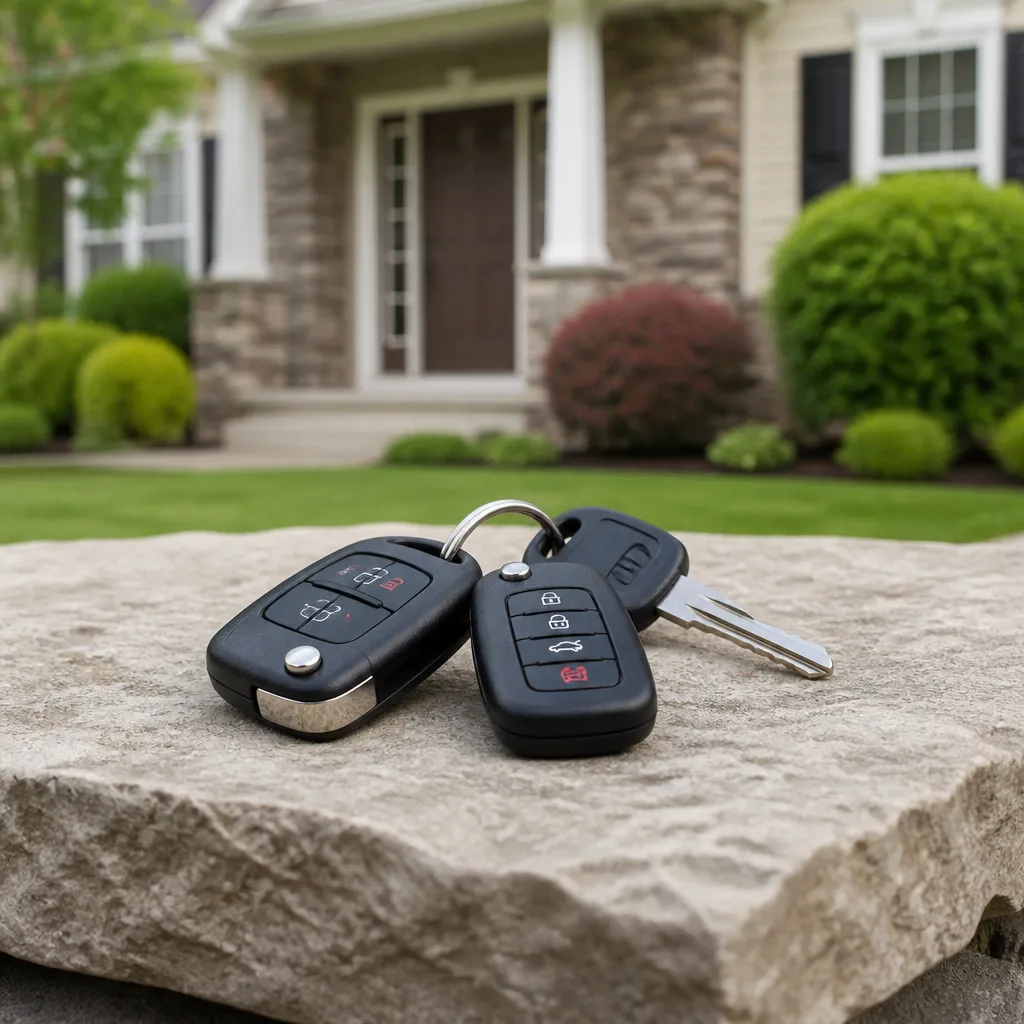 Car keys & fobs
Non-destructive entry first, always - and we re-key Schlage, Kwikset, and Baldwin locks on the spot while you watch
You get a price before we start. It does not change when we arrive. No surprises.
Get your free estimateLocksmith Permits, Codes & Inspections in WA: What You Need to Know
Washington is one of fewer than 15 states with no mandatory locksmith licensing. That means the person rekeying your front door in Tacoma has faced the same legal barrier to entry as someone opening a lemonade stand. No state exam. No bond requirement. No fingerprinting. If that surprises you, you’re not alone – most homeowners only discover this gap when an insurance claim gets denied or a commercial tenant disputes who authorized a lock change. This guide explains exactly what Washington does and doesn’t regulate, which city-level rules matter in Tacoma, when a permit is actually required, and how to verify a locksmith’s competence in a state that won’t do it for you. For Locksmith Warning Signs: A Tacoma Homeowner’s Reference Guide, see our companion resource.
Quick Answer
Washington does not require a state-issued locksmith license, permit, or certification. Locksmith work is not covered by the state’s Private Investigator Act or alarm contractor rules, and only certain cities (including portions of Tacoma’s permitting framework) impose local business registration or permit requirements. Credentialing falls to voluntary certifications like ALOA’s, while building permits come into play only when a project alters door frames, fire-rated assemblies, or multi-family housing hardware. The practical takeaway: you, the customer, are the screening mechanism.
Styles & brands we work with
Table of Contents
- Does Washington Require a Locksmith License?
- The Private Investigator Act and Why It Doesn’t Cover Locksmiths
- Alarm Contractor Rules: The Adjacent Regulation That Confuses Everyone
- What Tacoma Actually Requires: Business Licenses, Not Locksmith Permits
- When a Locksmith Job Needs a Building Permit
- ALOA Certification: The De Facto Standard in a License-Free State
- Landlords, Tenants, and RCW 59.18: The Legal Side of Lock Changes
- Common Mistakes to Avoid
Does Washington Require a Locksmith License?
No. Washington has no locksmith-specific license at the state level, and there’s no board that oversees locksmith education, conduct, or consumer complaints. The state’s Department of Licensing (DOL), which handles everything from cosmetology to real estate, has no locksmith category on its books. If you call the DOL and ask how to verify a locksmith, the answer is that you can’t – there’s nothing to verify.
Here’s what that means in practice:
- No background check is required to advertise as a locksmith in Washington.
- No proof of training or apprenticeship is required before someone can drill out your deadbolt.
- No bond or insurance mandate exists at the state level. A locksmith can operate without either.
- No continuing education requirements exist, so a locksmith who learned on hardware from 1985 is under no obligation to keep current.
- No complaint resolution process exists through the state. You’re relying on local consumer protection or civil court.
This stands in stark contrast to states like California, Texas, and North Carolina, all of which require licensing that includes background checks, testing, and insurance minimums. Washington’s approach is deregulation by default – the legislature has simply never passed a locksmith licensing bill, despite periodic efforts.
For Tacoma homeowners, the practical effect is simple: when you hire a locksmith, you are doing the vetting the state declined to do. That’s not a reason to panic. It’s a reason to ask better questions, check for ALOA credentials, and confirm the business carries its own insurance. At Lodestar Locksmith, we’ve built our service model around the assumption that customers shouldn’t need a law degree to know they’re working with a competent professional – but we also recognize why this regulatory gap unsettles people. Our Seasonal Locksmith Care for Tacoma: Year-Round Homeowner’s Guide offers additional maintenance tips.
The Private Investigator Act and Why It Doesn’t Cover Locksmiths
If you’ve done any research into Washington locksmith regulation, you’ve likely stumbled across references to the Private Investigator Act (RCW 18.165). Here’s the direct answer: the Private Investigator Act does not cover locksmiths, and any locksmith claiming to be “licensed by the state of Washington” under this act is either misinformed or deliberately misleading you.
The confusion comes from historical overlap. Private investigators have long performed certain lock-related services – opening locks during forensic investigations, for example – and some states bundle locksmithing under PI statutes. Washington is not one of them. The Private Investigator Act regulates individuals conducting investigations, surveillance, and certain security consultations. It requires licensing through the DOL, background checks, and insurance. Locksmithing is a service, not an investigation, and the act simply doesn’t apply.
Here’s what the act does cover, so you can see the boundary clearly:
- Private investigations – surveillance, background checks, locating missing persons.
- Security consultations – advising businesses on vulnerability assessments and loss prevention.
- Bodyguard and executive protection services – personal security details.
- Process serving – delivering legal documents.
What it does not cover: installing a Schlage deadbolt, rekeying a Kwikset, cutting a car key, opening a locked door for a locked-out resident, or servicing a Medeco high-security cylinder. None of that requires a PI license, and a PI license doesn’t authorize any of it.
In our experience at Lodestar Locksmith, this confusion occasionally surfaces when commercial clients ask whether our work overlaps with their PI or security consultant relationships. The cleanest way to think about it: locksmithing is hardware and access. Private investigation is information and people. Washington law keeps them in separate lanes.
Alarm Contractor Rules: The Adjacent Regulation That Confuses Everyone
Another regulatory neighbor that gets tangled up with locksmith questions is Washington’s alarm contractor licensing law. Locksmiths and alarm installers both deal with physical security, and plenty of businesses do both. But the legal requirements are not interchangeable.
Washington requires alarm system installers and monitoring companies to hold an electrical contractor license or work under a licensed electrical contractor when the installation involves low-voltage wiring that connects to a building’s electrical system. This matters because many locksmiths also install electronic access control – keypads, card readers, electric strikes – and that work can cross into alarm and electrical territory.
Here’s the line:
- Mechanical lock work – deadbolts, cylinders, rekeys, mortise locks, key cutting – requires no license in Washington.
- Battery-operated or standalone electronic locks – a Schlage Encode or a Yale smart lock that runs on batteries and connects wirelessly – generally requires no electrical permit or license because there’s no hardwired connection.
- Hardwired access control – an electric strike, magnetic lock, or card reader that ties into building power or a fire alarm release – may fall under electrical contractor rules and could require a permit depending on scope and jurisdiction.
This distinction matters in Tacoma more than in rural parts of the state. Tacoma’s commercial buildings range from small storefronts on Pacific Avenue to large multi-tenant buildings near the University of Washington Tacoma campus, and plenty of landlords and business owners are installing access control as part of broader security upgrades. If your project includes hardwired components, the smart approach is to ask the locksmith upfront whether the electrical portion will be handled by a licensed electrical contractor. A professional who knows the boundary will answer directly. One who waves the question away is signaling something worth paying attention to.
Lodestar Locksmith’s focus is mechanical and standalone electronic locking hardware – Schlage, Kwikset, Yale, Baldwin, and the high-security lines like Medeco and Mul-T-Lock – so the electrical contractor question rarely arises on our jobs. But we raise it here because it’s exactly the kind of adjacent regulation that surprises homeowners and business owners mid-project, and surprises in security work are rarely good ones.
What Tacoma Actually Requires: Business Licenses, Not Locksmith Permits
Tacoma requires any business operating within city limits to hold a Tacoma business license. This includes locksmiths. It’s a registration, not a competency credential. The city verifies that the business exists, pays its fees, and has a local address or registered agent. The city does not test locksmith skills, inspect tools, or require proof of insurance. A Tacoma business license means the company is on the city’s books. It does not mean the person at your door has ever rekeyed a cylinder correctly.
That said, the license is still worth checking. Here’s why:
- It establishes the business has a verifiable legal presence in the city, which gives you a starting point if something goes wrong.
- It means the business is paying Tacoma’s business and occupation (B&O) tax, which is a mild but real signal that the operation is above board.
- It’s a quick public check – you can verify a Tacoma business license through the city’s online portal, and you should do so before inviting anyone into your home.
Beyond the basic business license, Tacoma does not impose a locksmith-specific permit. Some cities around the country require locksmiths to register with the police department or obtain a special security-services permit. Tacoma does not. The city treats a locksmith like any other service business – which, given the sensitivity of the work, is precisely the consumer-protection gap this guide exists to address.
One more local layer: certain Tacoma neighborhoods, particularly in historic districts like the North Slope, may have design review or preservation requirements that affect door hardware on street-facing entrances. If your home is in a designated historic district, changing visible hardware (a big, modern deadbolt on a 1910 door, for example) may require additional review. This isn’t a locksmith regulation per se, but it’s a real-world Tacoma consideration that can delay a project if unaddressed.
When a Locksmith Job Needs a Building Permit
Most locksmith work – rekeying, cylinder replacement, key cutting, car key programming, lock installation in existing door prep – requires no building permit in Washington. The line is crossed when the work modifies the door, the frame, or the fire-rated opening itself. Once structure gets involved, the rules change.
Here’s a practical breakdown of when you should expect a permit conversation:
- Replacing a lock in existing door prep: No permit. This covers swapping a Kwikset for a Schlage, upgrading to a Medeco deadbolt, or installing a smart lock in a standard prep.
- Rekeying existing hardware: No permit. The hardware doesn’t change; only the pins inside do.
- Enlarging a bore hole or mortise pocket: Potentially permit-relevant. This is a door modification, and on fire-rated doors in commercial or multi-family buildings, it’s a serious code matter.
- Modifying or reinforcing a door frame: Likely permit-relevant in commercial and multi-family settings. Residential work is more lenient, but a structural frame change on any building type can trigger review.
- Installing a new door or frame: Permit territory, especially in commercial spaces. This is less a locksmith job than a door-and-hardware job, and it intersects with fire code, accessibility (ADA), and egress requirements.
- Fire-rated door hardware changes: This is the one we flag most often. In commercial and multi-family buildings in Tacoma, fire-rated doors must maintain their listings. Installing unauthorized hardware on a fire door is a code violation that can fail an inspection and create real liability.
For Tacoma multi-family buildings – apartments, condos, and mixed-use buildings scattered across the city – the stakes are higher. Fire doors in corridors and stairwells are inspected, and non-compliant hardware gets written up. A landlord or property manager who asks a locksmith to “just put a new deadbolt on” a fire-rated door may be creating a violation without realizing it. A competent locksmith knows which doors are which and will say so before making a change.
Lodestar Locksmith’s rekey work across Tacoma’s rental housing stock frequently involves buildings where these code questions come up. Our approach is to flag them early, recommend the right hardware for the right opening, and make sure the property manager isn’t inheriting a violation.
ALOA Certification: The De Facto Standard in a License-Free State
In a state that won’t credential locksmiths, the industry has built its own. The Associated Locksmiths of America (ALOA) runs the most recognized certification program in the trade, and in Washington, ALOA credentials function as the closest thing to a licensing standard you’ll find.
ALOA offers several tiers:
- Registered Locksmith (RL): Entry-level certification demonstrating core knowledge of key systems, basic lock servicing, and key duplication.
- Certified Registered Locksmith (CRL): A step up, requiring additional tested competencies in areas like master keying and safe opening (though not necessarily safe work).
- Certified Professional Locksmith (CPL): The recognized professional standard, covering advanced knowledge across commercial hardware, master keying, and security principles.
- Certified Master Locksmith (CML): The top tier, typically held by locksmiths with deep experience across mechanical and electronic access control systems.
ALOA certification requires passing proctored exams. It is not bought. It is not given for attending a weekend seminar. A locksmith who holds a CRL or CPL designation has demonstrated competence in a tested, standardized environment. That’s not the same as a state license with regulatory teeth – ALOA can’t suspend someone’s right to work – but it’s a meaningful signal that the person you’re hiring takes the craft seriously.
Specific brand training matters too, especially for the security-conscious customer. Medeco, for example, restricts its high-security cylinders and key systems to locksmiths who have gone through Medeco’s own training and authorization process. You can’t call a generalist in Tacoma and assume they can duplicate a Medeco key or service a Mul-T-Lock cylinder. These manufacturers actively control who has access to key blanks, pinning specs, and service procedures. If your home or business has high-security hardware, the locksmith you hire needs to be authorized for that specific brand, regardless of any general certification or license.
At Lodestar Locksmith, the brand list we work across – Schlage, Kwikset, Medeco, Yale, Baldwin, Mul-T-Lock, Sargent, and Abloy – reflects a deliberate investment in training across tiers. Most regional locksmiths stop at consumer-grade hardware. We work in the brands you researched, including the ones that require manufacturer authorization, because the security-literate customer has already done the homework.
Landlords, Tenants, and RCW 59.18: The Legal Side of Lock Changes
Washington’s Residential Landlord-Tenant Act (RCW 59.18) directly addresses who can change locks on rental property and under what circumstances. This is the area where an uncredentialed locksmith and an unaware landlord can create legal exposure without either party realizing it.
Here’s what the statute requires:
- Landlords cannot unilaterally change locks to evict a tenant. Lockouts as a self-help eviction are expressly prohibited under RCW 59.18.290. A landlord cannot hire a locksmith to rekey a tenant out of a unit as a shortcut around the eviction process.
- Landlords must provide new keys after a lawful lock change. If a lock is changed for legitimate reasons (security, maintenance, owner move-in after a proper notice), the landlord must furnish new keys to remaining tenants.
- Domestic violence survivors have specific rights. Under RCW 59.18.575, a tenant who has a valid protection order or a report of domestic violence can request a lock change at their own expense. The landlord must comply within a specific timeframe, and the landlord must provide the new key to the tenant who requested the change. The abuser’s key rights are severed.
- Tenants generally cannot change locks without landlord consent. Unless it’s the DV-protection scenario above, a tenant who rekeys on their own may be in breach of the lease. However, the landlord’s remedy is through the court process, not through an illegal lockout.
In Tacoma, where rental housing makes up a significant share of the city’s residential stock – from older multi-family buildings in Central Tacoma to newer units around the Proctor district – these rules come up constantly. A locksmith who rekeys a tenant out of a unit on a landlord’s casual request may be enabling an illegal eviction. A locksmith who refuses to change a lock for a tenant presenting a valid protection order may be creating civil liability for the landlord.
The professional position is to know the law, ask the right questions, and in ambiguous cases, recommend the requests be documented. Lodestar Locksmith’s rekey work across Tacoma rental housing is built on the assumption that a lock change is a legal act as much as a mechanical one.
Common Mistakes to Avoid
- Assuming the word “licensed” means anything in Washington. Anyone can print it on a van. If a locksmith claims to be state-licensed, ask for the license number and issuing agency, then verify. There is no such thing in this state.
- Not verifying a Tacoma business license before letting someone into your home. It takes two minutes on the city’s website. The fact that a license proves nothing about skill doesn’t mean you should skip the check.
- Hiring a locksmith whose only brand experience is whatever is sold at the big-box hardware store. If you have high-security hardware, the generalist will either turn the job down or, worse, try to improvise. Improvisation on a Medeco cylinder ends badly.
- Treating a fire door like any other door. In commercial and multi-family buildings, changing hardware on a fire-rated opening without understanding the listing requirements is a straight line to a failed inspection.
- Forgetting that a lock change on a rental unit is a legal act. Landlords who rekey to evade the eviction process create liability. Tenants who rekey without consent create lease violations. Both should know the rules under RCW 59.18 before touching hardware.
- Confusing smart locks with permit-free work in every case. A battery-operated smart lock is fine. A hardwired access-control installation is a different animal and likely needs a licensed electrical contractor.
When to Call a Professional
There are situations where the permit and licensing questions become real, not theoretical. If you’re replacing hardware on a fire-rated door in a Tacoma commercial building, call a locksmith who understands code compliance before you buy anything. If you’re a landlord responding to a tenant’s RCW 59.18.575 lock-change request, the timeline matters and the paperwork matters more – a professional who knows the statute will help you comply without creating liability. If you have high-security hardware from Medeco, Mul-T-Lock, or Abloy, you already need a specialist; that’s non-negotiable, and it’s the difference between a working system and a bricked cylinder. And if you’re locked out at an inconvenient hour, this is not the time to audit credentials – it is the time to call someone who shows up steady when it matters.
Lodestar Locksmith offers free estimates in Tacoma – call (855) 382-0943 for honest guidance before you touch a lock, a door, or a key.
Frequently Asked Questions
No. Washington has no state-level locksmith license, no locksmith board, and no mandatory credentialing of any kind. The state does not verify training, run background checks, or require insurance. Consumers must verify a locksmith’s competence through voluntary certifications like ALOA’s and by asking about specific experience with the hardware they own. Browse our more guides & resources for additional homeowner tools.
Start by checking for a current Tacoma business license through the city’s online portal. Then ask for ALOA certification level (CRL or CPL are meaningful), proof of insurance, and confirmation that the locksmith is authorized to service your specific hardware brand if it’s a restricted high-security line like Medeco or Mul-T-Lock. In our experience, a professional answers these questions directly. A deflector is a red flag.
No, not for a standard deadbolt replacement in existing door prep. Permits come into play when the door itself, the frame, or a fire-rated assembly is modified. Enlarging bore holes, changing hardware on a fire door, or installing new doors and frames all potentially trigger permit and code requirements, especially in commercial and multi-family buildings.
Not as a method of eviction. Washington’s RCW 59.18.290 explicitly prohibits lockouts as self-help eviction. A landlord can only change locks for lawful purposes (security, maintenance, owner occupancy after proper notice) and must provide new keys to lawful tenants. Changing locks to force a tenant out is illegal, and a locksmith who knowingly assists is exposed too.
There isn’t one. Washington has no equivalent to California’s Bureau of Security and Investigative Services or North Carolina’s Alarm Systems Licensing Board. The closest thing to a credentialing body is ALOA, the Associated Locksmiths of America, whose certifications are voluntary but industry-recognized.
Yes, in one specific circumstance. Under RCW 59.18.575, a tenant who has a valid protection order or a qualifying domestic violence report can request a lock change at their own expense, and the landlord must comply and provide the new key. Outside that scenario, tenants generally need landlord consent to change locks, and unauthorized changes can be a lease violation.
The Bottom Line
Washington’s lack of locksmith licensing shifts the verification burden onto the customer – which is uncomfortable but manageable if you know what to check. Confirm the business has a local Tacoma license, ask about ALOA certification and insurance, and match the locksmith’s experience to the hardware you actually have. Respect the boundaries where permits and landlord-tenant law intersect, and understand that fire doors and hardwired access control are not the same as a standard deadbolt swap. The system isn’t designed to protect you from unqualified operators. A little diligence fills the gap; for everything from Lodestar Locksmith home resources to rekey lock guidance, to emergency locksmith assistance, or car key replacement specifics, being informed is your best first line of defense.
Written by the team at Lodestar Locksmith, serving Tacoma since 2012.